8404 NW 90th St Unit 100, Medley, Florida 33166
 +1 (305) 356-4026 Ext 6
 contact@quick.us





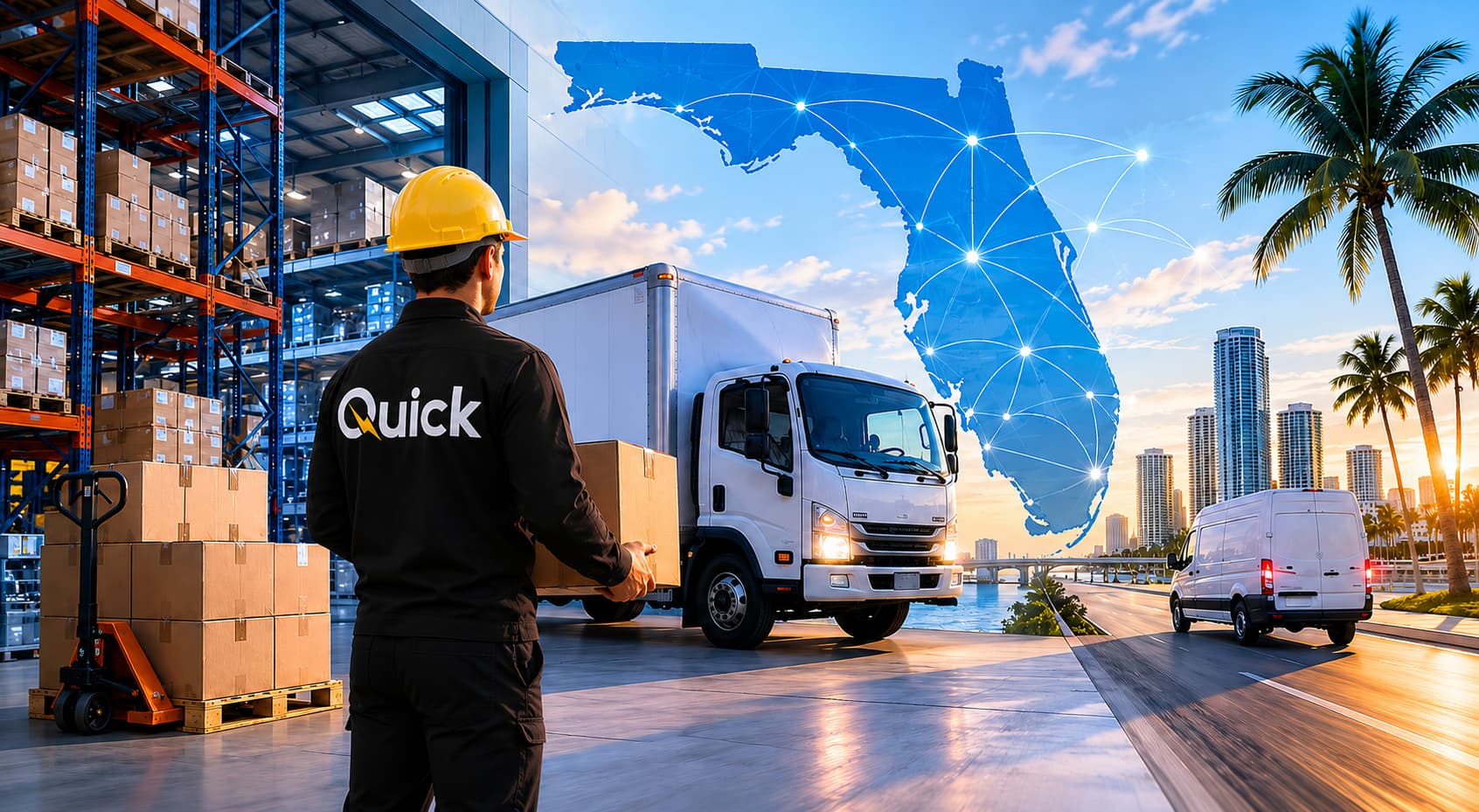
Managing domestic freight transportation has become increasingly complex for supply chain leaders. Rising transportation costs, capacity fluctuations, delayed shipments, labor shortages and increasing customer expectations continue to put pressure on logistics operations across the United States.
For Supply Chain Directors and Operations Managers, the challenge is no longer simply moving freight from point A to point B. The real challenge is building a transportation strategy that improves visibility, reduces costs, increases reliability and supports business growth.
The good news is that companies can significantly improve freight performance by implementing the right domestic freight transportation strategy and partnering with logistics providers that offer integrated transportation, warehousing and distribution solutions.
In this guide, we’ll explore the key components of domestic freight transportation, the biggest challenges facing supply chains today and how businesses can create more efficient freight operations across the United States.
Executive Summary
If you’re evaluating domestic freight transportation solutions, here are the most important takeaways:
- Domestic freight transportation directly impacts profitability, customer satisfaction and supply chain performance.
- FTL, LTL, Drayage and Cross Border transportation each serve different operational needs.
- Real time shipment visibility is now essential for modern logistics operations.
- Transportation and warehousing should work together as a single logistics ecosystem.
- Businesses that centralize logistics operations often reduce costs and improve efficiency.
- Technology driven logistics providers deliver greater control and scalability.
What Is Domestic Freight Transportation?
Domestic freight transportation refers to the movement of goods and cargo within the United States through various transportation modes and logistics networks.
It encompasses every stage of the freight journey, including planning, carrier selection, shipment execution, tracking, delivery coordination and performance management.
Domestic freight transportation serves as the backbone of the American economy, connecting manufacturers, distributors, retailers, warehouses, ecommerce businesses and consumers through an interconnected logistics infrastructure.
Whether a company is moving a full truckload from Texas to Florida or distributing products from a warehouse in Miami to multiple retail locations, freight transportation plays a critical role in maintaining supply chain continuity.
For growing businesses, transportation is not simply an operational necessity. It is a competitive advantage.
Why Domestic Freight Transportation Matters More Than Ever
Today’s supply chains operate in a highly competitive environment where speed, visibility and reliability directly influence business outcomes.
Customers expect faster deliveries.
Retailers require tighter inventory management.
Manufacturers need predictable transportation schedules.
Ecommerce companies must provide real time order visibility.
As a result, freight transportation has evolved from a support function into a strategic business driver.
Organizations that optimize transportation often achieve:
- Lower logistics costs
- Faster delivery times
- Better customer experiences
- Reduced inventory carrying costs
- Improved operational visibility
- Greater supply chain resilience
Companies that fail to optimize transportation frequently experience shipment delays, rising costs and customer dissatisfaction.
The Biggest Challenges Facing Domestic Freight Transportation Today
Rising Transportation Costs
Fuel expenses, labor shortages, equipment availability and market volatility continue to increase transportation costs throughout the United States.
Many businesses struggle to balance service levels with cost control.
Without proper transportation planning and carrier management, freight expenses can quickly erode profit margins.
Lack of Real Time Visibility
One of the most common frustrations among Supply Chain Directors is the inability to track shipments accurately.
Without real time visibility, businesses face:
- Delayed decision making
- Customer service issues
- Inventory disruptions
- Increased operational risk
Modern transportation requires continuous shipment visibility from pickup through final delivery.
Capacity Constraints
Freight markets are constantly changing.
Seasonal demand, economic fluctuations and regional disruptions can impact carrier availability and transportation capacity.
Businesses need transportation partners capable of adapting quickly to changing market conditions.
Fragmented Logistics Operations
Many companies work with multiple carriers, warehouses and logistics providers simultaneously.
While this may appear flexible, it often creates:
- Communication gaps
- Operational inefficiencies
- Reduced visibility
- Increased management complexity
Centralizing logistics operations can significantly improve efficiency.
Looking to Simplify Transportation Operations?
Quick helps businesses centralize freight transportation, warehousing, fulfillment and distribution under one technology driven logistics ecosystem.
Whether you need FTL, LTL, Drayage, Cross Border transportation or warehousing support, Quick provides end to end logistics solutions designed to improve visibility and operational performance.
Understanding the Different Types of Domestic Freight Transportation
Not all freight transportation solutions serve the same purpose.
Selecting the right mode can dramatically improve efficiency and reduce costs.
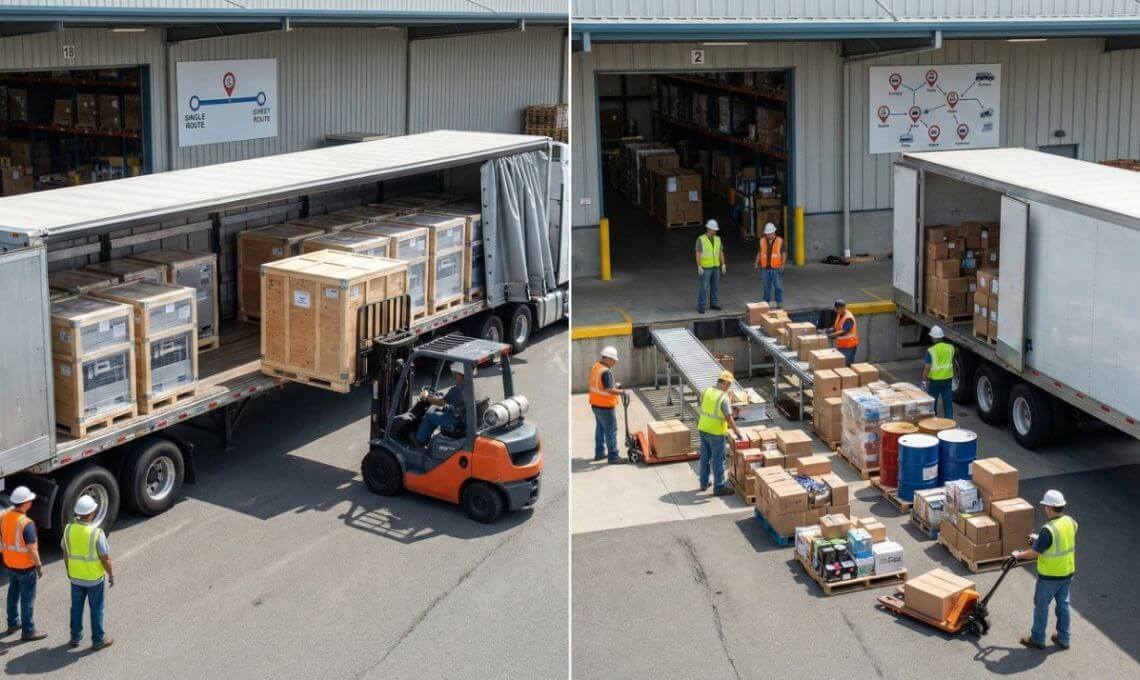
Full Truckload (FTL) Transportation
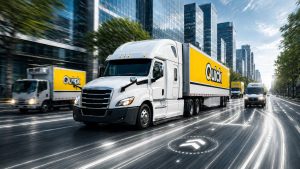
FTL transportation is ideal when a shipment requires the entire capacity of a trailer.
Businesses commonly use FTL for:
- High volume shipments
- Time sensitive deliveries
- High value cargo
- Direct transportation routes
Benefits of FTL include:
- Faster transit times
- Reduced freight handling
- Improved cargo security
- Greater shipment control
For businesses moving large volumes of freight, FTL often provides the most efficient solution.
Less Than Truckload (LTL) Transportation
LTL transportation allows multiple shippers to share trailer space.
This solution is ideal for businesses that do not require a full truck.
Advantages include:
- Lower transportation costs
- Flexible shipment sizes
- Improved transportation efficiency
- Nationwide service coverage
LTL is commonly used by manufacturers, distributors and ecommerce businesses seeking cost effective transportation options.
Drayage Services
Drayage plays a critical role in domestic freight transportation by moving containers between ports, rail terminals, warehouses and distribution centers.
As imports continue growing, drayage has become increasingly important for supply chain performance.
Effective drayage services help businesses:
- Reduce port congestion delays
- Accelerate cargo movement
- Improve inventory flow
- Optimize intermodal transportation
Cross Border Freight Transportation
For businesses operating between the United States, Mexico and Canada, cross border transportation has become a strategic necessity.
Cross border logistics requires:
- Regulatory compliance
- Customs coordination
- Carrier expertise
- End to end visibility
Businesses that rely on North American supply chains benefit significantly from transportation providers experienced in cross border operations.
How Technology Is Transforming Domestic Freight Transportation
Technology has become one of the most important differentiators in modern freight transportation. Supply chain leaders no longer make decisions based solely on rates or transit times. Visibility, automation and real time data have become essential components of efficient logistics operations.
Companies that leverage logistics technology are better equipped to identify bottlenecks, optimize transportation routes and improve customer service.
Real Time Freight Tracking
One of the biggest frustrations in transportation is uncertainty.
When businesses do not know where their shipments are, they cannot make informed decisions regarding inventory, customer communication or operational planning.
Real time freight tracking provides:
- Shipment visibility from pickup to delivery
- Faster issue resolution
- Improved customer communication
- Better inventory planning
- Increased operational control
Modern transportation providers should offer complete shipment transparency throughout the freight journey.
Route Optimization and Transportation Intelligence
Transportation costs are heavily influenced by routing decisions.
Advanced logistics technology helps identify the most efficient transportation routes by considering factors such as:
- Traffic conditions
- Delivery schedules
- Fuel consumption
- Carrier performance
- Transit times
By optimizing routes, businesses can reduce costs while improving service levels.
Data Driven Logistics Management
Supply chain leaders need access to accurate data to make strategic decisions.
Transportation analytics can help identify:
- Cost reduction opportunities
- Carrier performance trends
- Delivery bottlenecks
- Service level improvements
- Capacity planning opportunities
Companies that embrace data driven logistics often outperform competitors in both efficiency and customer satisfaction.
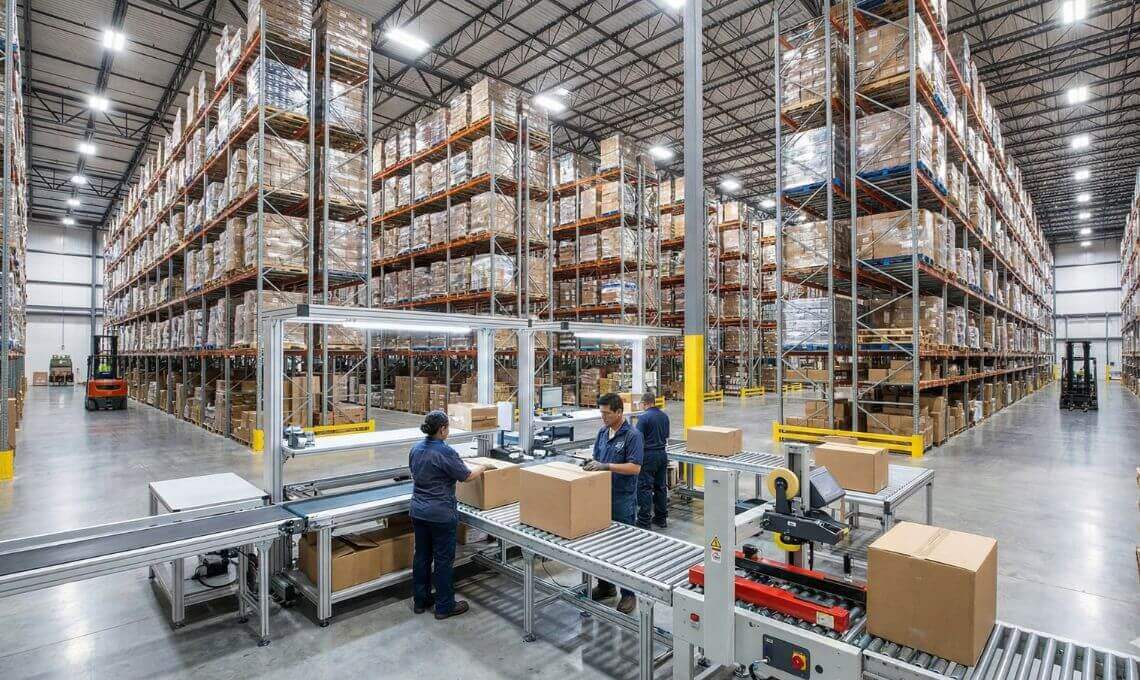
Why Warehousing and Transportation Must Work Together
One of the biggest mistakes organizations make is treating warehousing and transportation as separate functions.
In reality, these operations are deeply connected.
When transportation and warehousing work together, businesses gain greater control over inventory movement, order fulfillment and customer delivery performance.
The Cost of Logistics Silos
Disconnected logistics operations often create:
- Delayed shipments
- Inventory inaccuracies
- Higher transportation costs
- Poor communication
- Reduced visibility
When warehouse teams and transportation providers operate independently, inefficiencies quickly emerge.
The Advantage of Integrated Logistics
An integrated logistics model combines:
- Warehousing
- Inventory management
- Fulfillment
- Freight transportation
- Distribution
Under a unified operational strategy.
This approach creates faster workflows, better communication and improved customer experiences.
Faster Distribution Through Strategic Warehousing
The location of a warehouse directly impacts transportation efficiency.
Strategically located facilities reduce transit times, lower transportation costs and improve delivery performance.
Businesses that position inventory closer to key markets can respond faster to customer demand while maintaining lower operational costs.
Want to Reduce Transportation Costs and Improve Delivery Performance?
Quick combines domestic freight transportation, warehousing, fulfillment and distribution into one integrated logistics ecosystem.
This allows businesses to eliminate operational silos, improve visibility and scale more efficiently.
Why Miami Is a Strategic Hub for Domestic Freight Transportation
Miami has become one of the most important logistics centers in the United States.
Its strategic location provides direct access to domestic and international transportation networks, making it an ideal gateway for supply chains serving both North America and Latin America.
Key advantages include:
- Access to major interstate highways
- Proximity to Miami International Airport
- Access to Port Miami
- Strong warehousing infrastructure
- International trade connectivity
For companies seeking to optimize transportation and distribution operations, Miami offers significant competitive advantages.
Businesses can leverage Miami as a distribution hub to accelerate deliveries across Florida, the Southeast and international markets.
How Supply Chain Directors Can Reduce Freight Costs Without Sacrificing Service
Reducing transportation costs should never come at the expense of customer satisfaction.
The most successful supply chain organizations focus on improving efficiency rather than simply cutting expenses.
Optimize Freight Mode Selection
Many businesses overpay for transportation because they consistently choose the wrong shipping mode.
Understanding when to use:
- FTL
- LTL
- Drayage
- Dedicated transportation
Can significantly improve transportation economics.
Consolidate Logistics Providers
Working with multiple transportation vendors often increases complexity and reduces visibility.
Consolidating logistics services under one provider can improve:
- Communication
- Operational efficiency
- Reporting
- Cost control
Increase Shipment Visibility
The earlier a problem is identified, the faster it can be resolved.
Real time visibility reduces disruptions and enables proactive decision making.
Use Strategic Distribution Centers
Properly located inventory can reduce transportation distances and accelerate delivery performance.
Businesses that strategically position inventory often experience lower transportation costs and improved service levels.
Choosing the Right Domestic Freight Transportation Partner
Not all logistics providers offer the same capabilities.
Selecting the right transportation partner can significantly impact operational performance.
When evaluating providers, consider the following factors:
Nationwide Coverage
Can the provider support freight movement across the United States?
Transportation Expertise
Do they offer FTL, LTL, Drayage and Cross Border services?
Technology Capabilities
Do they provide real time visibility and operational reporting?
Scalability
Can they support your business as transportation volumes increase?
Integrated Logistics Solutions
Do they combine transportation, warehousing and distribution services?
The strongest logistics partners provide comprehensive solutions rather than isolated services.
Why Businesses Choose Quick for Domestic Freight Transportation
Companies today need more than a freight provider.
They need a logistics partner capable of supporting the entire supply chain.
Quick has become a trusted logistics partner for businesses across the United States because of its ability to integrate transportation, warehousing and technology into a single operational ecosystem.
Nationwide FTL and LTL Coverage
Quick provides scalable transportation solutions across the United States, helping businesses move freight efficiently regardless of shipment size.
Drayage and Port Transportation Expertise
Quick supports importers, exporters and freight forwarders through reliable drayage services that connect ports, warehouses and distribution centers.
Cross Border Logistics Solutions
Businesses operating between the United States, Mexico and Canada benefit from Quick’s expertise in cross border transportation and international supply chain management.
Strategic Warehousing in Miami
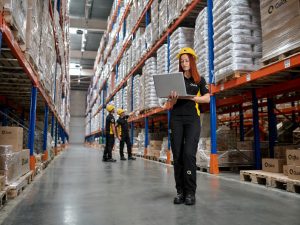
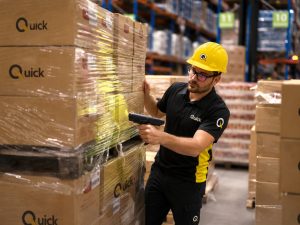
Quick offers warehousing, storage, fulfillment and inventory management services from one of the most important logistics hubs in the country.
South Florida Distribution and Dedicated Truck Services
Local transportation capabilities help businesses improve regional distribution performance throughout Florida.
Technology Driven Operations
Real time visibility, transportation intelligence and operational reporting help customers maintain complete control of their logistics operations.
Frequently Asked Questions About Domestic Freight Transportation
What is domestic freight transportation?
Domestic freight transportation refers to the movement of goods and cargo within the United States through trucking and logistics networks.
What is the difference between FTL and LTL freight?
FTL uses an entire truck for a single shipment, while LTL combines freight from multiple shippers in the same trailer.
How can businesses reduce freight transportation costs?
Companies can reduce costs by optimizing freight modes, improving visibility, consolidating logistics providers and using strategically located distribution centers.
What are drayage services?
Drayage services transport shipping containers between ports, rail terminals, warehouses and distribution facilities.
Why is real time freight tracking important?
Real time tracking improves shipment visibility, reduces uncertainty and allows businesses to respond quickly to operational disruptions.
Should transportation and warehousing be managed together?
Yes. Integrating transportation and warehousing often improves efficiency, visibility and overall supply chain performance.
Why Quick Is the Best Choice for Domestic Freight Transportation
Domestic freight transportation is no longer just about moving products.
It is about creating a supply chain that is faster, more efficient and more resilient.
Quick helps businesses achieve this by combining freight transportation, warehousing, fulfillment and technology into one integrated logistics platform.
Whether your organization requires FTL shipping, LTL transportation, drayage services, cross border logistics, warehousing or local distribution, Quick provides the expertise and infrastructure needed to support long term growth.
By partnering with Quick, Supply Chain Directors and Operations Managers gain a logistics partner focused on improving visibility, reducing complexity and driving operational excellence across every stage of the supply chain.
Ready to optimize your domestic freight transportation strategy?