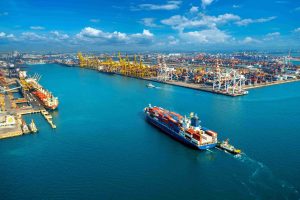
In high-volume international trade and North American distribution, minimizing container dwell times and avoiding unnecessary warehousing costs are critical to supply chain profitability. For enterprise importers, manufacturers, and e-commerce brands routing ocean freight through Florida ports (PortMiami and Port Everglades), traditional long-term warehousing is often inefficient. Keeping merchandise tied up inside ocean containers or paying long-term racking fees inflates carrying costs, locks up working capital, and exposes businesses to severe detention and demurrage penalties.
To eliminate these bottlenecks, forward-thinking logistics directors deploy high-velocity transloading and cross-docking solutions in South Florida. By transferring cargo directly from inbound maritime containers into domestic dry vans or regional transport fleets with minimal or zero intermediate storage, brands achieve immediate speed-to-market advantages. This operational guide analyzes the mechanics of strategic transloading and cross-docking and demonstrates how Quick USA optimizes supply chain velocity.
Traditional Storage vs. Quick High-Velocity Transloading & Cross-Docking
For supply chain VPs, trade compliance managers, and logistics executives evaluating South Florida gateway operations, this diagnostic matrix compares traditional warehousing models against Quick’s asset-backed transloading and cross-docking framework.
Operational Vector
Traditional Long-Term Storage
Quick High-Velocity Transloading & Cross-Docking
Enterprise Financial & Operational Impact
Container Dwell Time
High risk of port demurrage & ocean carrier detention fees.
Immediate port drayage and same-day container stripping.
Eliminates expensive port penalties; returns empty containers fast.
Warehousing Overhead
High monthly racking fees and static inventory carrying costs.
Minimal or zero intermediate storage lag; continuous freight flow.
Converts fixed storage costs into lean, variable operational outlays.
Cargo Handling & Sorting
Manual, multi-step unstacking, racking, and delayed order picking.
Automated scan-verify sorting, palletization, and immediate loading.
Regional warehousing isolated from real-time national transport lines.
Direct integration with regional trucking and nationwide FTL/LTL networks.
Accelerates product delivery to US distribution hubs and retail floors.
Strategic Mechanics: Transloading vs. Cross-Docking Execution
While transloading and cross-docking share the core objective of accelerating inventory velocity, they serve distinct operational functions within modern logistics.
Transloading: Maximizing Equipment Volume and Lowering Interstate Freight Costs
When ocean containers arrive at Florida ports, they are bound by international maritime weight restrictions and ocean carrier equipment rules. Transporting a 40-foot ocean container directly across interstate highways to a inland US destination is financially inefficient: it ties up specialized marine equipment, incurs daily container rental fees, and leaves available over-the-road volume unutilized.
Volume Optimization: Inbound freight from three 40-foot ocean containers is stripped, verified, and consolidated into two 53-foot domestic dry-van trailers.
Equipment Return: Ocean containers are returned immediately to marine terminals, completely shielding your business from carrier detention penalties.
Cost Efficiency: Consolidating cargo into domestic over-the-road trailers reduces total highway trip counts, lowering overall nationwide line-haul expenses.
Cross-Docking: High-Velocity Sorting for Time-Sensitive Retail and E-Commerce
For fast-moving consumer goods (FMCG), seasonal fashion lines, and high-turnover e-commerce inventory, traditional warehouse racking creates unnecessary distribution delays.
Quick’s cross-docking framework operates as a high-speed transit hub. Incoming shipments are unloaded at receiving docks, scanned against live purchase orders, sorted by SKU, palletized to custom retail specifications, and transferred directly across the facility floor to outbound staging lanes. Within hours of arrival, your cargo is dispatched on regional delivery trucks or nationwide FTL/LTL lines, ensuring peak speed-to-market without incurring warehouse storage fees.
Leaving ocean containers stranded on port docks or holding fast-moving inventory in static warehouse racks inflates operating costs and delays market delivery. Quick’s transloading and cross-docking services in Miami combine asset-backed drayage with high-speed facility processing in our Medley hub.Optimize your cross-docking operations with Quick here to experience modern logistics speed.
Transloading and Cross-Docking Miami: Freight Services | Quick
Strategic Infrastructure: The Medley, Florida Gateway Advantage
The success of a transloading and cross-docking program relies heavily on facility location and transport asset access.
Bypassing Urban Gridlock for Accelerated Terminal Transfers
Situated in the industrial corridor of Medley, FL, Quick’s facility sits adjacent to primary freight arteries, including the Palmetto Expressway (SR 826), Florida’s Turnpike, and Interstate 95. This strategic location enables our dedicated drayage fleets to bypass metropolitan Miami traffic congestion, executing rapid container transfer loops between PortMiami, Port Everglades, Miami International Airport (MIA), and our dock doors.
Digital Transparency and Real-Time Software Integration
Speed means nothing without data accuracy. Quick integrates proprietary warehouse tracking software with real-time barcode scanning hardware. Every carton or pallet stripped during a transload or cross-dock operation is digitally verified against your master bill of lading (BOL) or electronic advance shipping notice (ASN). Operations managers gain live visibility over active cross-dock milestones, stock counts, and electronic Proof of Delivery (e-POD) receipts through our cloud portal.
Managing transloading and cross-docking across unaligned third-party brokers creates tracking gaps and increases cargo handling damage. Our integrated logistics platform unifies your port drayage, cross-dock processing, and final-mile distribution under a single digital screen.Request a specialized transloading quote today to upgrade your supply chain execution.
Interconnected Ecosystem: Unifying Your Florida and US Supply Chain
Achieving total supply chain resilience requires connecting your transloading and cross-docking hub directly with our broader suite of warehousing, customs, and transport assets:
Guaranteed Regional Fleet Placement: Secure dedicated trucks and scheduled local distribution across Florida using an asset-backed south florida carrier regional freight trucking infrastructure.
Secure Port Container Drayage Tracking: Move ocean containers rapidly from maritime terminals to transload docks using agile drayage services miami port logistics setups.
Certified Bonded Trade Facilitation: Defer import tariffs on international retail goods and eliminate double-taxation on transit cargo through a premier bonded warehouse in miami duty deferral gateway.
Elastic Industrial Storage & Inventory Controls: Secure flexible storage capacity and real-time inventory oversight via a customized warehouse in miami scalable 3pl storage footprint.
High-Performance Miami 3PL Terminals: Accelerate container de-consolidation and regional cross-docking through a strategic warehouse in miami high velocity 3pl hub.
Time-Critical Air Freight Transfers: Retrieve urgent imported air freight directly from flight ramps via TSA-certified drivers and specialized airport transfer services miami air freight configurations.
Zero-Error Consumer Brand Protection: Master multi-channel fulfillment and big-box vendor mandates through optimized retail logistics solutions omnichannel 3pl engineering.
Comprehensive Miami Commercial Storage: Scale your South Florida industrial footprint by utilizing tech-enabled logistics and storage services in miami setups.
Unified Crossborder Supply Chain Alignment: Connect your international export operations directly to North American markets through optimized crossborder logistics miami latam workflows.
Dedicated Regional Trucking Services: Secure dedicated truck fleets and local pickup/delivery capacity using an asset-backed south florida carrier local pickup delivery infrastructure.
FAQ: Transloading and Cross-Docking Services in Miami
What is the primary difference between transloading and cross-docking?
Transloading involves transferring cargo from one mode of transport or container type to another (e.g., transferring freight from 40ft ocean containers into 53ft domestic trailers) to optimize long-distance transport costs. Cross-docking involves receiving inbound goods, sorting them by outbound destination, and loading them onto delivery trucks immediately with minimal or zero intermediate warehouse storage.
How do transloading services help eliminate ocean container demurrage and detention fees?
Transloading eliminates detention fees by pulling ocean containers from seaport gates immediately upon customs clearance, stripping the cargo inside an inland facility, and returning the empty marine equipment to port terminals well before free-time limits expire.
What types of freight benefit most from cross-docking in South Florida?
Fast-moving consumer goods (FMCG), seasonal apparel and textiles, promotional retail items, high-turnover e-commerce stock, and perishable food products benefit most from cross-docking due to the need for rapid speed-to-market.
Can Quick perform value-added processing (VAS) during a transload or cross-dock operation?
Yes. During transloading or cross-docking, Quick can perform specialized value-added services, including barcode re-labeling, pallet re-wrapping, custom sorting, inner-carton inspection, and retail compliance verification before outbound loading.
Managing an enterprise-level import program into the United States requires absolute synchronization across international and domestic transport corridors. For global importers, international manufacturers, and enterprise supply chain directors routing ocean...
Transporting environmentally sensitive, temperature-controlled, or high-value freight across the United States requires an uncompromising level of operational control. For enterprise manufacturers, pharmaceutical distributors, food producers, and luxury consumer brands moving...
Executing high-velocity local distribution across South Florida’s dense commercial corridors requires absolute control over physical transit assets and real-time dispatch technology. From the industrial warehouses of Medley and Doral to...
 8404 NW 90th St Unit 100, Medley, Florida 33166
 +1 (305) 356-4026 Ext 6
 contact@quick.us