8404 NW 90th St Unit 100, Medley, Florida 33166
 +1 (305) 356-4026 Ext 6
 contact@quick.us





Bonded freight requires accurate documentation and controlled handoffs between the port, carrier, and authorized storage location. This guide explains the questions importers should resolve with their customs broker and logistics providers before moving uncleared cargo through Miami.
To eliminate these upfront costs, global supply chain directors leverage specialized, customs-controlled storage environments. Shippers cannot afford to rely on standard domestic warehousing facilities that lack the federal certifications required to store uncleared customs cargo. Protecting corporate liquidity and optimizing global trade lanes demands a certified bonded warehouse in Miami. This guide explores the strategic advantages of customs-bonded storage and details how a secure, tech-enabled gateway optimizes international distribution.
Standard Warehouse Storage vs. Customs Bonded Warehouse
For corporate trade executives and compliance managers evaluating storage configurations, this matrix contrasts the regulatory boundaries and financial mechanics of standard domestic warehousing against a customs-bonded storage framework.
| Operational & Fiscal Vector | Standard Domestic Warehousing | Customs Bonded Warehouse (Quick) | Corporate Financial Impact |
| Tariff Payment Timeline | Duties and import taxes must be paid immediately at the port of entry before storage. | Customs duties are deferred until cargo enters the domestic market for sale. | Preserves working capital; aligns tax payments directly with product sales. |
| Re-export Tax Liability | Double taxation occurs: paying US import duties first, then target country taxes. | Zero US customs duties are assessed on cargo re-exported directly out of the country. | Eliminates unnecessary tax exposure; lowers total international landed costs. |
| Regulatory Supervision | Standard commercial security with no direct oversight from US Customs. | Under continuous bond and direct supervision of US Customs and Border Protection (CBP). | Ensures absolute regulatory compliance; minimizes risk of federal auditing. |
| Storage Term Limitations | Subject only to private commercial contracts and space availability. | Uncleared merchandise can be stored legally under bond for up to 5 years. | Provides long-term storage flexibility for slow-moving international inventory. |
Navigating the Advantages of Customs Bonded Storage in South Florida
Utilizing a customs-bonded storage facility is not merely a regulatory compliance maneuver; it is a sophisticated financial strategy that directly influences corporate cash flow and global trade agility.
Unlocking Capital with Strategic Duty Deferral Programs
When a shipment of high-value consumer electronics, industrial components, or cosmetics arrives at a US seaport or airport, the importer of record is typically required to clear customs and settle all federal tariffs before the cargo can leave the port boundary. For large enterprise shipments, these immediate tax outlays can pull hundreds of thousands of dollars out of active working capital, locking up cash that could otherwise be used for regional manufacturing, marketing, or expansion.
Operating within a certified bonded warehouse in Miami completely rewrites this fiscal dynamic. Under CBP regulations, imported merchandise can be transferred directly from arrival terminals to a bonded storage zone with all duty payments deferred.
The physical goods can be stored safely inside the facility for up to five years. Duties are only calculated and paid to the US government at the exact moment the products are formally withdrawn from the bonded space and entered into US domestic commerce. If your products are sold gradually over several months, your tariff payments scale proportionally, aligning your tax liabilities directly with your commercial revenue streams.
Eliminating Double Taxation on International Re-exports (LATAM Transit)
Miami is the undisputed crossborder gateway to Latin America and the Caribbean, serving as a primary consolidation and distribution hub for multinational brands. Many global companies ship bulk inventory from international factories to South Florida hubs, consolidate those products into custom regional shipments, and export them directly to secondary markets across Central and South America.
If these transshipments are processed through standard domestic facilities, the shipper is forced to pay US import tariffs upon port arrival, only to face secondary import taxes when the cargo reaches its final destination country. This double-taxation penalty can easily render an international distribution model financially unviable.
A customs-bonded facility completely eliminates this double taxation. Because the inventory remains under customs bond within the facility, it is legally considered to have never entered US commerce. When the consolidated cargo is prepared and dispatched for direct re-export to international markets, the initial US duty liabilities are completely canceled. This frictionless transit framework allows global brands to operate high-velocity regional distribution hubs in Florida without paying a single dollar in US import taxes.
Paying import tariffs immediately at the port freezes your working capital and limits your international trade agility. Quick’s certified bonded warehouse in Miami provides secure, customs-controlled storage and strategic duty deferral to optimize your cash flow. Secure your bonded storage space with Quick here to experience modern corporate trade facilitation.
Seamless Integration of Intermodal Drayage and Bonded Storage
Successfully executing a bonded storage strategy requires an unbroken, highly secure chain of custody extending directly from ocean terminal gates to the warehouse racking systems.
Safe Transit from Seaport Terminals under Customs Seal
The physical transfer of uncleared import containers from seaport terminals—such as the Port of Miami or Port Everglades—to an inland bonded warehouse is a highly regulated logistics maneuver. These movements cannot be executed by standard local trucking companies or uncredentialed independent drivers. Doing so violates federal security protocols and exposes the importer to severe compliance penalties.
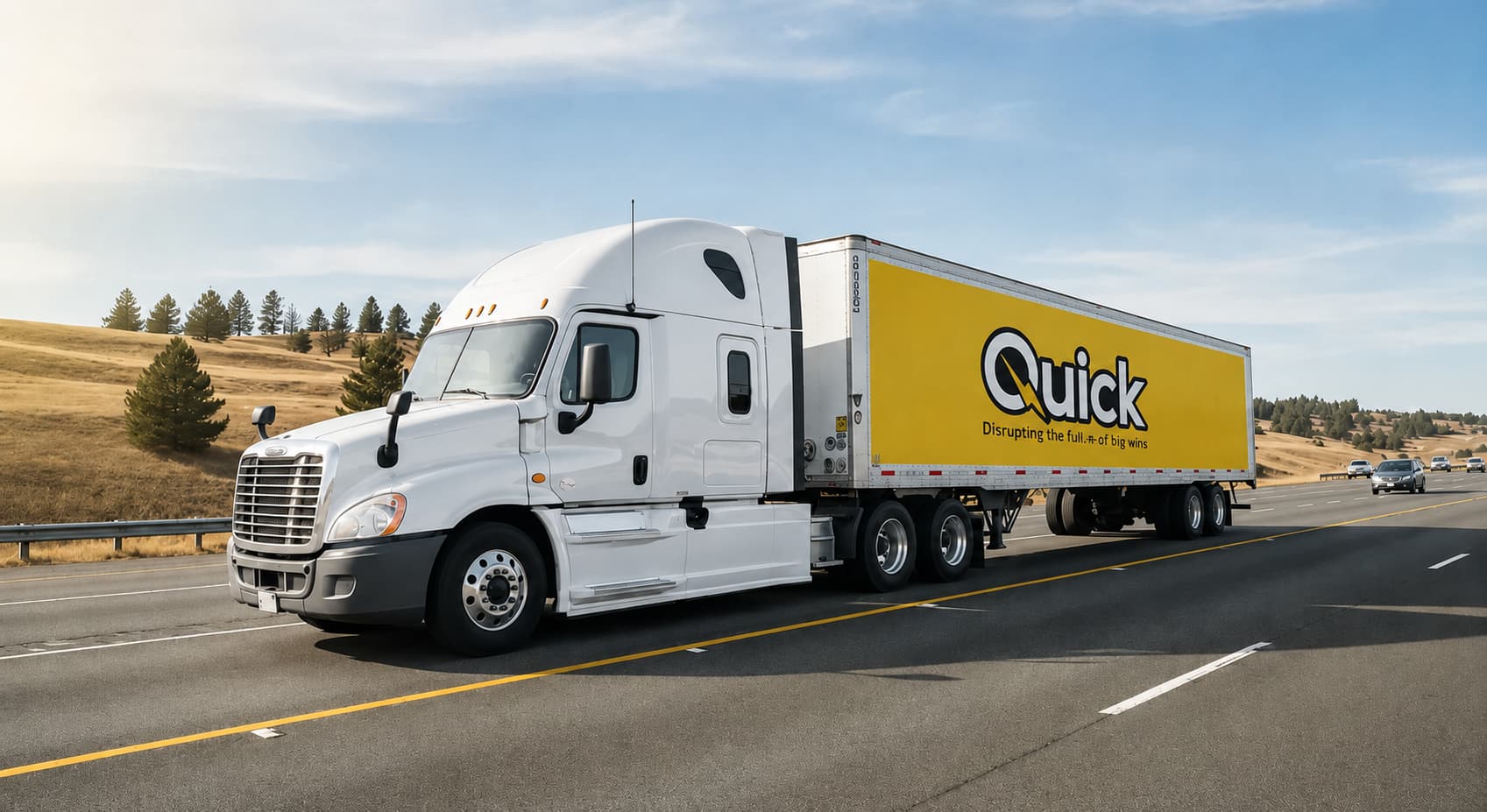
Executing these transfers securely requires specialized intermodal transport configurations operating under customs seal. Dedicated drayage fleets must utilize certified, background-screened drivers who possess the necessary federal clearances to handle bonded cargo. By coordinating container pickups directly with terminal operators and securing customs-approved transit permits, specialized transport assets pull containers from port gates and deliver them straight to our Medley facility under an unbroken customs seal, maintaining absolute compliance throughout the transit corridor.
Tech-Enabled Audits and Automated Customs Documentation Control
The administrative demands of managing a bonded inventory footprint are substantial. US Customs and Border Protection enforces strict recordkeeping mandates, requiring warehousing providers to provide complete digital traceability for every SKU under bond. If an inventory audit reveals discrepancies between digital customs filings and the physical cargo inside the building, the shipping brand faces severe administrative fines and potential cargo seizures.
Overcoming these compliance risks requires replacing legacy manual logging with advanced inventory optimization software. Utilizing a technology-driven logistics platform ensures that all customs documentation—including CBP Entry Form 7501, automated warehouse receipts, and electronic shipping manifests—is digitally synchronized with physical inventory milestones. This real-time visibility provides corporate trade compliance desks with constant access to clean, fully auditable inventory histories, ensuring seamless regulatory compliance and eliminating administrative friction during customs audits.
💡 Corporate Efficiency Note
Operating international transshipments without real-time customs tracking exposes your brand to severe compliance penalties. Our advanced technology platform synchronizes custom document flows with physical inventory milestones to guarantee absolute compliance. Request a specialized bonded storage quote today to modernize your international trade footprint.
Strategic Links: Unifying Your International Trade Corridor
Achieving comprehensive supply chain resilience requires connecting your customs-controlled warehousing nodes with your overland transport networks and intermodal assets. Quick’s advanced Miami infrastructure is designed to integrate directly with our complete suite of logistics services:
- Automated Smart Storage & Picking: Manage your cleared and uncleared inventory layers under a single roof. Our integrated cloud software automates order tracking and optimizes picking accuracy through smart 3pl fulfillment services miami warehouse tech configurations.
- Guaranteed Regional Fleet Placement: Protect your local B2B deliveries from spot-market vehicle shortages. Utilizing our asset-backed regional trucking options provides fixed contract stability via a dedicated south florida carrier regional freight trucking infrastructure.
- High-Velocity Interstate Shipping: Move cleared inventory predictably across long distances to out-of-state distribution hubs. Our nationwide network delivers consistent FTL and LTL line-haul transport through comprehensive domestic freight solutions us overland logistics options.
- Zero-Error Omnichannel Retail Fulfillment: Master multi-channel distribution and satisfy strict big-box vendor mandates. Our specialized industry setups eliminate retail compliance fines through optimized retail logistics solutions omnichannel 3pl engineering.
- Scalable Industrial Warehouse Management: Secure flexible storage capacity and real-time inventory oversight. Our premier facility offers scalable space and high-velocity processing through an advanced warehouse in miami scalable 3pl storage footprint.
- High-Performance Miami 3PL Nodes: Optimize your regional distribution and cross-docking operations. Our high-velocity terminal offers rapid container de-consolidation through a strategic warehouse in miami high velocity 3pl hub.
- Secure Port Container Drayage Tracking: Eliminate expensive terminal storage fees and demurrage penalties. Our specialized intermodal assets execute rapid seaport terminal transfers utilizing agile drayage services miami port logistics setups.
- Unified Crossborder Supply Chain Alignment: Connect your North American warehousing network directly to primary consumer markets across the global south. Centralizing your logistics through our Miami gateway optimizes complex crossborder logistics miami latam workflows.
Explore Quick’s Miami warehouse and fulfillment services to discuss the capacity, visibility, and operating handoffs required for your business.
FAQ: Mastering Customs-Controlled Warehousing in Florida
What is a bonded warehouse in Miami and how does it benefit international traders?
A bonded warehouse in Miami is an industrial facility secured and certified by US Customs and Border Protection (CBP) to store imported goods under customs bond. It benefits international traders by allowing them to store uncleared foreign merchandise, defer customs duties and import taxes until the products enter domestic commerce, and completely avoid US tariffs on cargo destined for international re-export.
How long can imported goods be stored in a customs bonded warehouse?
Under US Customs regulations, imported merchandise can be legally stored inside a certified bonded warehouse for up to five years from the original date of import. This extended timeframe provides global shippers with substantial inventory management flexibility, allowing them to align tariff outlays directly with slower retail rotation cycles or seasonal demand spikes.
Do I have to pay US customs duties on goods that are re-exported to Latin America?
No. When imported goods are stored in a customs-bonded warehouse and subsequently exported directly out of the United States to international markets (such as Latin American or Caribbean transit routes), the initial US customs duty liabilities are completely canceled. This framework prevents double taxation and makes Miami an ideal regional transshipment hub.
Can a bonded warehouse process both cleared and uncleared inventory simultaneously?
Yes, provided the facility is designed and partitioned to meet strict CBP separation guidelines. Advanced 3PL providers utilize advanced warehouse management software to segregate and track bonded (uncleared) cargo and domestic (cleared) inventory within the same physical facility, allowing brands to manage their entire regional stock pool from a unified operational hub.