8404 NW 90th St Unit 100, Medley, Florida 33166
 +1 (305) 356-4026 Ext 6
 contact@quick.us






Modern commerce operates at a velocity that leaves traditional supply chain architectures obsolete. For enterprise organizations distributing goods across North America or hubbing inventory for international markets, selecting an industrial storage facility is no longer just about buying floor space or pallet racks. The modern bottleneck is not physical capacity; it is informational friction.
For supply chain directors, operating within a logistics “black box”—where inventory status is updated manually and cargo tracking relies on legacy email threads—introduces unacceptable operational risks. Protecting market share and ensuring customer retention requires complete alignment between physical handling and digital intelligence. This strategic guide explores how technology transforms a standard 3PL warehouse in Miami from a static storage space into a high-velocity, data-driven fulfillment engine.
Legacy Warehouses vs. Tech-Enabled 3PL: Operational Diagnostic
For logistics executives reviewing their current fulfillment partnerships, this matrix establishes the key operational distinctions between legacy storage models and advanced, tech-enabled 3PL frameworks.
| Operational Indicator | Legacy Warehousing Models | Tech-Enabled 3PL Infrastructure (Quick Model) | Net Enterprise Value |
| Inventory Tracking | Manual cycle counts, batch ledger updates, and end-of-day Excel reports. | Continuous digital monitoring, instant status changes, and cloud data access. | Eliminates costly stockouts, prevents over-stocking, and ensures 100% data accuracy. |
| Order Processing | Paper-based pick lists, manual data entry, and fragmented dispatch scheduling. | Automated order workflows, digital wave picking, and instant lane routing. | Accelerates fulfillment speed; reduces processing errors to near zero. |
| Shipment Traceability | Disconnected carrier links, manual check-calls, and delayed milestone verification. | Integrated real-time tracking software with instant digital milestone updates. | Provides proactive exception management and builds absolute corporate transparency. |
| Commercial Quoting | Delayed email pricing, hidden accessorial fees, and multi-day contract negotiations. | Transparent digital quoting tools, direct rate comparison, and direct booking options. | Streamlines freight budgeting; accelerates supply chain agility. |
The Evolution of Warehousing: Beyond Four Walls and Racks
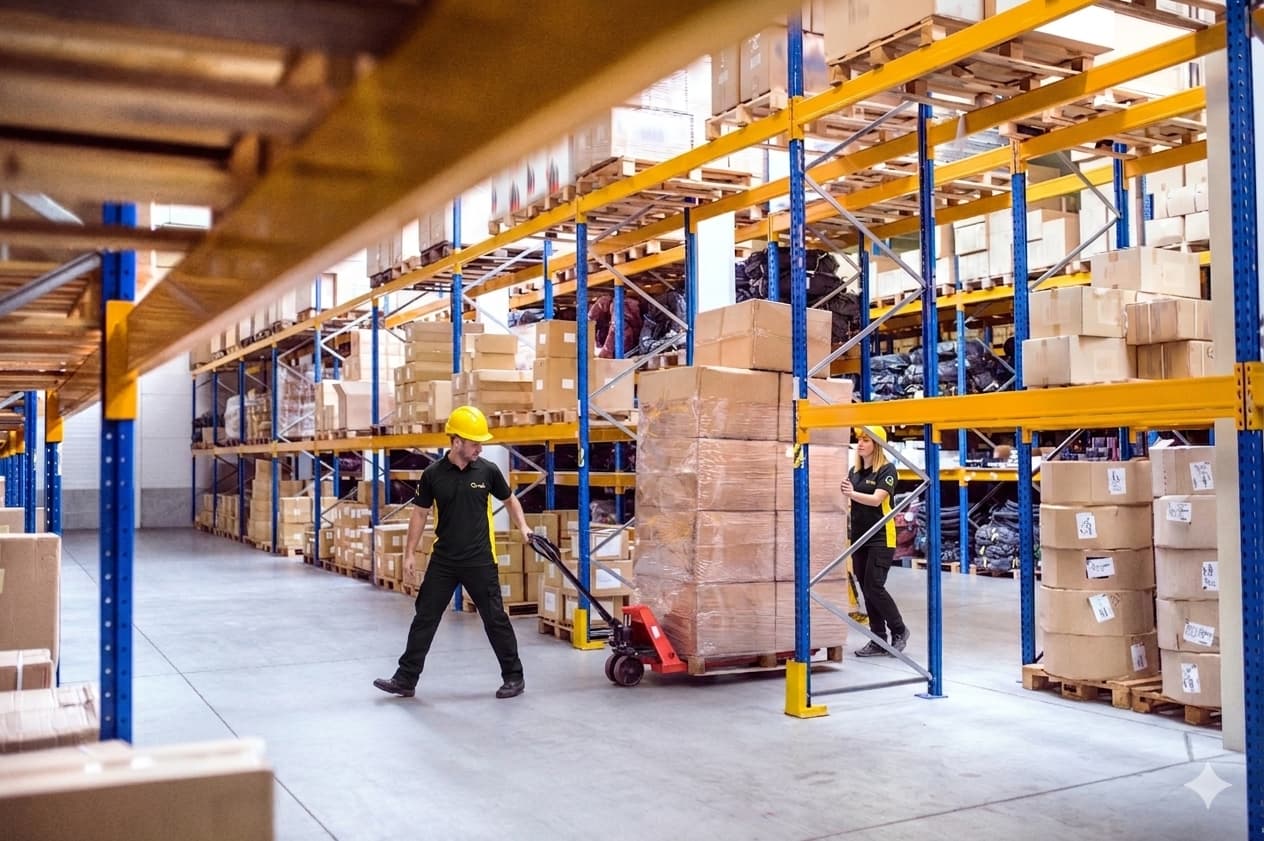
Industrial warehousing has undergone a profound structural shift. Historically, facilities were treated as passive holding areas designed to store bulk inventory until a seasonal distribution request arrived. Today, macro-economic pressures and just-in-time (JIT) delivery mandates have turned the warehouse into a high-velocity fulfillment node.
Breaking the “Black Box” of Traditional Storage in Florida
Operating through a legacy warehouse provider in South Florida introduces hidden operational costs that steadily erode profit margins. When a facility relies on manual workflows, information lag is inevitable. Inventory that arrives on the receiving dock may take 24 to 48 hours to be scanned into a legacy warehouse management system, leaving sales teams completely blind to available sellable stock.
This lack of immediacy creates a dangerous operational blind spot. Without centralized data accessibility, corporate supply chains cannot adapt to rapid demand spikes or trace inventory transit milestones accurately across multiple distribution channels. Relying on disconnected communication patterns means supply chain managers are consistently forced into a reactive stance—scrambling to address shipping errors, lost pallets, or billing disputes long after they occur.
Tech-Enabled Fulfillment as a Growth Catalyst
Transitioning to an advanced fulfillment infrastructure completely redefines operational velocity, especially within a critical logistics corridor like Medley, FL. A tech-enabled 3PL warehouse replaces human variables with automated workflows designed to maximize processing speed.
The moment a digital order enters the ecosystem, the software instantly optimizes the fulfillment execution path. From calculating efficient picking paths to generating automated packing verifications and immediate shipping labels, the entire lifecycle of a shipment is systematically controlled. This high-precision tracking ensures that high-volume B2B retail shipments or time-sensitive international consolidations are processed, verified, and placed on outbound transportation assets within tight service level agreement (SLA) windows.
💡 Strategic Optimization Note
Losing visibility of your stock leads to broken distribution promises, inventory friction, and costly transit delays. Quick’s tech-enabled 3PL warehouse infrastructure in Miami provides absolute transparency over your inventory milestones with zero manual friction. Explore our tech-driven storage solutions here to experience corporate fulfillment built for the digital age.
Essential Features of a Modern Tech-Driven 3PL Platform
Evaluating a modern third-party logistics partner requires looking closely at the digital infrastructure supporting the physical warehouse. Enterprise-grade operations demand a unified software platform that consolidates complex data sets into clear, actionable operational insights.
Real-Time Freight Tracking Software and Inventory Milestones
True supply chain visibility must extend from the warehouse rack to the final destination delivery gate. An advanced 3PL platform acts as a single, centralized source of truth, collecting data points from every link in the logistics chain. Shippers must have instantaneous, on-demand digital access to their inventory layers, inbound receipt tracking, and historical service logs.
This continuous visibility is critical when managing multi-border operations or complex domestic distribution loops. Instead of waiting for automated daily summaries, operations managers can track individual freight movements, monitor live customs clearance flags, and verify immediate digital Proof of Delivery (POD) confirmations. This access allows corporate teams to mitigate exceptions proactively before they disrupt client relations.
Instant Digital Quoting and Rate Transparency
Traditional logistics procurement is plagued by administrative delays, often requiring multi-day wait times just to secure an international freight estimate or specialized warehouse quote. This lack of transparency complicates corporate budgeting and limits operational agility.
A tech-forward 3PL architecture removes this barrier by providing immediate digital access to commercial rates. Utilizing advanced quoting algorithms, corporate clients can enter shipment specifications, instantly compare shipping lane variables (such as FTL, LTL, Drayage, or Airport Transfers), and secure immediate bookings online. This speed ensures that logistics teams can capitalize on fast-moving market opportunities without being delayed by manual administrative negotiations.
💡 Corporate Efficiency Note
Relying on fragmented end-of-day spreadsheets leaves your international supply chain highly vulnerable to unexpected operational gaps. Our proprietary software platform automates cargo tracking and logistics control, putting live data directly into your hands. Request a live platform demo or a free fulfillment quote today to modernize your supply chain management.
Checklist: Tech Requirements Your Miami 3PL Partner Must Meet
When auditing a potential third-party logistics provider to anchor your corporate fulfillment and distribution network in Florida, verify that their digital infrastructure satisfies these institutional benchmarks:
- Cloud-Accessible Logistics Control: The platform must be accessible 24/7 from any secure device, allowing global teams to monitor inventory, generate reports, and track shipments without location restrictions.
- Continuous Multi-Channel Visibility: The software must deliver unbroken, real-time data tracing across all fulfillment stages—from inbound container receiving and cross-docking to final over-the-road transit.
- Automated Order Processing Capabilities: Ensure the facility utilizes automated systems that instantly sync order requests with warehouse picking teams, minimizing human data entry and accelerating order velocity.
- Transparent Digital Document Repository: Your operations team must have instant access to essential digital documentation, including immediate Bills of Lading (BOL), commercial customs manifests, and electronic Proof of Delivery (POD).
- Unified Historical Reporting Dashboards: The system should automatically compile complete historical data logs, service histories, and cost allocations to facilitate smooth corporate auditing and strategic freight planning.
FAQ: Understanding Tech-Enabled 3PL Warehousing
What is a tech-enabled 3PL warehouse and how does it work?
A tech-enabled 3PL warehouse integrates advanced cloud software, data visibility tools, and digital inventory workflows directly into physical storage and fulfillment operations. It replaces manual logging with real-time digital tracking, allowing businesses to automatically manage, monitor, and route inventory from a single centralized web dashboard.
How does real-time software improve inventory accuracy in Miami?
Real-time software ensures that every physical movement within the warehouse—such as receiving cargo, moving pallets to specific racks, or executing order picking—is tracked and recorded instantly. This eliminates the data entry lag, human counting errors, and misplaced inventory issues that commonly disrupt legacy warehouses utilizing manual or paper-based workflows.
Can I manage both B2B storage and crossborder tracking on a single platform?
Yes, provided your logistics partner operates on an integrated platform. Advanced systems unify distinct logistics services—such as long-term domestic warehousing, high-velocity fulfillment, container drayage, and international crossborder transport—into a single digital interface, eliminating the need to cross-reference multiple vendor portals.
What are the risks of selecting a warehouse that lacks advanced digital integration?
Choosing a provider without modern software capabilities exposes your business to chronic data delays, frequent stockout errors, untrackable transit delays, and unexpected accessorial fees. Without transparent data access, your team remains operationally reactive, making it difficult to optimize supply chain costs or satisfy strict client delivery windows.